In the annals of Mandarin pop music, few voices have left as indelible a mark as that of Teresa Teng. Her ethereal, honeyed tones seemed to float effortlessly through the airwaves of the 1970s and 1980s, captivating listeners across Asia and beyond. But it was not just the sweetness of her voice that defined her; it was her masterful, almost revolutionary, use of a vocal technique known as qìshēng—the "breathy voice"—that fundamentally reshaped the aesthetic contours of Chinese popular music.
Before Teng's ascent, the dominant vocal styles in Mandarin pop were often characterized by a more formal, almost operatic clarity. Singers like Zhou Xuan or Yao Li, icons of the shidaiqu era, possessed powerful, crystalline voices that projected emotion with a certain theatrical precision. The music itself, frequently infused with jazz or folk traditions, was beautiful but often adhered to a stricter, more traditional sonic palette. Emotion was conveyed through lyrical content and melodic flourish, but the very texture of the voice itself was not yet the primary vehicle for intimate feeling.
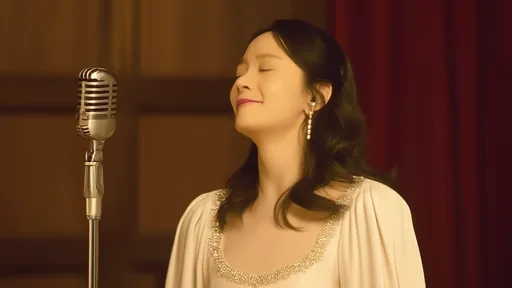
Teresa Teng introduced something entirely new: a sense of profound, whispered intimacy. Her technique involved a conscious and controlled release of air alongside the vocal tone, creating a soft, hazy, and incredibly personal sound. It was as if she were singing not to a vast audience in a concert hall, but directly into the ear of each individual listener. This qìshēng method was more than a stylistic quirk; it was an emotional language. It conveyed vulnerability, tenderness, longing, and a bittersweet melancholy that resonated deeply with the collective consciousness of a rapidly modernizing Asia.
The effect was transformative. Songs like "The Moon Represents My Heart" or "When Will You Return?" became instant classics not solely because of their timeless melodies, but because of how Teng delivered them. Her breathy phrasing made declarations of love feel like confidential secrets and expressions of yearning feel like private aches. This approachability, this human fragility woven into the fabric of the song, was a radical departure from the more performative and distant styles that preceded her.
Critics and musicologists have often pointed out that Teng's style did not emerge in a vacuum. There are clear influences from Japanese enka singing and even American crooners like Bing Crosby, who also employed a relaxed, conversational vocal style. However, Teng synthesized these influences into something uniquely her own and perfectly suited to the Mandarin language. The soft consonants and tonal nature of Mandarin allowed her breathy voice to glide and linger, enhancing the musicality of the language itself. She didn't just sing words; she caressed them, giving each syllable an emotional weight that transcended literal meaning.
The commercial and cultural explosion that followed cemented her status as a phenomenon. Teng's records sold in the millions, making her the best-selling Mandarin-language singer of all time. She became a symbol of softness and sophistication, a voice of comfort during periods of political tension and social change. For many, her music represented a cultural opening—a gentler, more cosmopolitan and emotionally expressive form of Chinese identity that was eagerly embraced in Taiwan, Hong Kong, Southeast Asia, and, later, covertly on the mainland.
Perhaps her most significant legacy, however, is the generation of artists she inspired and the new aesthetic standard she established. The qìshēng technique, once her signature, became a foundational tool in the Mandarin pop singer's arsenal. One can hear clear echoes of her influence in the soft, understated delivery of Faye Wong, who emerged in the 1990s as another epoch-defining artist. Wong, and countless others like Stefanie Sun or A-Mei, built upon Teng's blueprint, exploring even further the power of vocal texture and intimate expression.
This shift pushed producers and songwriters to create music that complemented this more nuanced vocal style. Arrangements became more spacious, often featuring delicate string sections, minimalist piano, and later, atmospheric synth pads, all designed to provide a bed for the voice to lie upon, rather than compete with it. The song became a vehicle for the singer's emotional state, a direct line to the listener's heart, a concept that is now a cornerstone of modern Mandopop.
Today, the breathy, intimate vocal is so ubiquitous in Chinese pop music that it is often taken for granted. From balladeers to indie artists, the pursuit of a personal, conversational, and emotionally transparent vocal quality remains paramount. This is Teresa Teng's enduring gift to the genre. She didn't just change how people sang; she changed how people felt music. She taught a continent that power could be found in softness, that strength could be revealed in vulnerability, and that the closest distance between two people was not a shout, but a whisper.
In redefining the technical and emotional possibilities of the singing voice, Teresa Teng did nothing less than redefine the auditory审美—the aesthetic sensibility—of modern Chinese pop culture. Her voice, suspended in breath and feeling, remains the gentle, unwavering heartbeat of a genre she helped create.

By /Aug 22, 2025
By /Aug 22, 2025
By /Aug 22, 2025
By /Aug 22, 2025

By /Aug 22, 2025

By /Aug 22, 2025

By /Aug 22, 2025
By /Aug 22, 2025
By /Aug 22, 2025

By /Aug 22, 2025

By /Aug 22, 2025

By /Aug 22, 2025

By /Aug 22, 2025

By /Aug 22, 2025
By /Aug 22, 2025
By /Aug 22, 2025
By /Aug 22, 2025
By /Aug 22, 2025
By /Aug 22, 2025
By /Aug 22, 2025