In an era dominated by digital streaming and crystal-clear audio files, the resurgence of vinyl records appears, at first glance, to be a simple wave of nostalgia. Yet, to dismiss this revival as merely a sentimental longing for the past is to overlook a deeper, more compelling narrative. The renewed fascination with vinyl is not just about the tactile experience of holding a record or the aesthetic appeal of album art; it is fundamentally rooted in the unique scientific properties of analog sound and its profound impact on human perception.
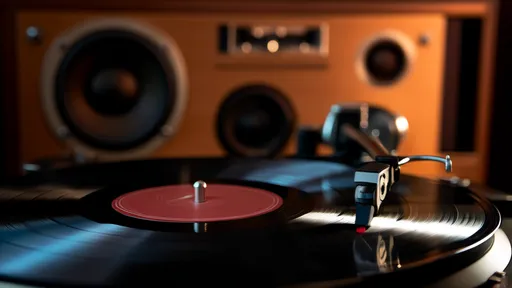
The core of the vinyl experience lies in its analog nature. Unlike digital audio, which translates sound into a series of binary numbers—discrete samples of the audio waveform—analog recording captures a continuous electrical signal that is a direct analog of the sound waves themselves. This signal is etched in a physical, mechanical format onto the vinyl groove. When the stylus traces these grooves, it vibrates, recreating that continuous analog signal which is then amplified and sent to the speakers. This process is a direct, physical representation of the original performance. There are no ones and zeros, no sampling rates, and no algorithms deciding what information is crucial and what can be discarded. It is a complete, unbroken chain from the studio microphone to the listener's ear.
This fundamental difference manifests in what audiophiles and casual listeners alike often describe as a "warmer," "richer," or more "authentic" sound. The science behind this perception is complex and multifaceted. Digital audio, for all its precision, is inherently limited by its sampling rate and bit depth. The infamous Nyquist-Shannon theorem dictates that a digital system can only perfectly reproduce frequencies up to half its sampling rate (e.g., 22.05 kHz for a 44.1 kHz CD-quality sample). While this covers the range of human hearing, the process of quantization—rounding off the amplitude of each sample to the nearest available digital value—introduces minute errors known as quantization noise. Sophisticated noise-shaping techniques push this error into inaudible ultrasonic frequencies, but the process remains a mathematical approximation.
Analog systems, conversely, are not constrained by such discrete limitations. They capture the entire waveform, including its subtle imperfections and the full spectrum of harmonics. This often results in a smoother representation of high frequencies. The gentle roll-off of high frequencies on vinyl, partly due to the RIAA equalization curve used during cutting and playback, is frequently perceived as less harsh or fatiguing than the sometimes brittle-sounding extreme highs in digital formats. Furthermore, the very imperfections of vinyl—the occasional soft crackle and pop—paradoxically contribute to its charm. Psychoacoustics research suggests that our brains can filter out consistent, low-level noise, often integrating it into the listening experience rather than perceiving it as a distraction, making these sounds part of the music's texture rather than a flaw.
Another critical factor is the phenomenon of dynamic range and mastering practices. During the "Loudness Wars" of the CD and early digital era, there was a trend to master music with increasingly high compression and limiting to make tracks sound louder on the radio and on iPods. This process sacrifices dynamic contrast—the difference between the quietest and loudest parts of a song—for perceived loudness, often resulting in a fatiguing, brick-walled sound with no breathing room. Vinyl presents a physical limitation to this practice. Excessive low-frequency energy and overly loud recordings can cause the stylus to jump out of the groove or make records unplayable. Consequently, albums mastered for vinyl are often done with more care for dynamic range, preserving the musicality and impact intended by the artists and engineers. Listeners subconsciously respond to this greater dynamic expression, finding it more emotionally engaging and less tiring over extended listening sessions.
The act of listening to vinyl also enforces a different, more intentional ritual. There is no infinite scroll of a digital library. The listener must choose a record, remove it from its sleeve, place it on the platter, and carefully lower the tonearm. This ritual demands attention and presence, shifting the experience from background noise to focused activity. This intentionality aligns with mindfulness practices, potentially reducing stress and increasing the listener's connection to the music. Neuroscientific studies have shown that focused, attentive listening can enhance the emotional and cognitive processing of music, making the experience more memorable and profound. The large-format artwork and liner notes further engage other senses, creating a multi-sensory experience that a thumbnail image on a screen cannot replicate.
Therefore, the vinyl revival is far more than a retro fad. It is a conscious choice driven by a combination of nuanced audio science and human psychology. It is a preference for the continuous, uncompressed waveform of analog sound over the mathematically perfect but discrete reconstruction of digital. It is a rejection of loudness for the sake of dynamic artistry. It is an embrace of a listening ritual that promotes mindfulness and deeper appreciation. The crackle of the needle dropping is not just the sound of the past; it is the sound of a more immersive, physically embodied, and scientifically resonant way to experience the art of music.

By /Aug 22, 2025
By /Aug 22, 2025

By /Aug 22, 2025
By /Aug 22, 2025

By /Aug 22, 2025
By /Aug 22, 2025
By /Aug 22, 2025
By /Aug 22, 2025
By /Aug 22, 2025
By /Aug 22, 2025

By /Aug 22, 2025

By /Aug 22, 2025
By /Aug 22, 2025

By /Aug 22, 2025

By /Aug 22, 2025

By /Aug 22, 2025
By /Aug 22, 2025
By /Aug 22, 2025

By /Aug 22, 2025
By /Aug 22, 2025