The Other Side of the Studio Tyrant": Phil Spector's "Wall of Sound" Production Technique

Aug 22, 2025 By

In the pantheon of music production, few figures cast a shadow as long or as contentious as Phil Spector. To speak of Spector is to invoke a duality as stark as the contrast between his revolutionary studio techniques and his notorious personal conduct. While the moniker "The Tycoon of Teen" captured his commercial Midas touch, and the darker "Studio Tyrant" his infamous working methods, it is the seismic innovation of his "Wall of Sound" production technique that remains his most enduring, complex, and artistically significant legacy. This sonic architecture, a dense and lavish orchestral panorama, did not merely change records; it fundamentally altered the very ambition of what a pop song could be, creating a world of sound that was at once monumental and intimately dramatic.

The Wall of Sound was not a singular invention but a holistic and obsessive philosophy of recording. Spector approached the studio not as a simple documentarian of a performance but as the primary instrument itself. His goal was to create a "Wagnerian approach to rock & roll," transforming the two-and-a-half-minute pop single into a miniature epic. To achieve this, he rejected the sparse, clean separation of instruments that characterized most contemporary recordings. Instead, he pursued a massive, textured, and immersive auditory experience where every frequency was saturated with sound. The result was a record that didn't just play from a speaker; it engulfed the listener, a tidal wave of emotion and grandeur that felt both timeless and utterly modern.

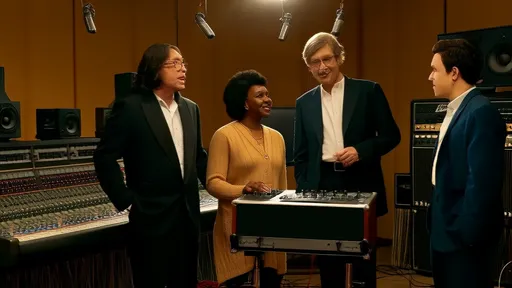
The construction of this wall was a feat of meticulous, almost alchemical engineering. It began with the songs themselves, often composed by the legendary teams at Brill Building, which provided the strong, simple melodic foundations capable of supporting the immense production weight. Spector would then assemble a vast ensemble of musicians—multiple pianos, three or four guitars playing identical parts, horns, and a string section that could rival a small orchestra. This was his palette. In the famed Gold Star Studios in Los Angeles, with its unique echo chambers, Spector and his brilliant engineer Larry Levine would place these musicians close together in the studio's live room, deliberately encouraging audio "bleed" between microphones. This was not an accident; it was the mortar between the bricks.

Instead of isolating each instrument, multiple players performing the same parts were recorded onto a single track of his pioneering three-track tape machine. This process of "layering" and "stacking" was crucial. Dozens of musicians might be playing, but they were being mixed live and printed down to a mere three tracks. This created an inseparable, monolithic blend of sound. Then came the final, defining touch: the application of copious amounts of tape echo and the legendary Gold Star chamber reverb. This wasn't subtle ambiance; it was an integral part of the instrument. The reverb fused the individual components into a single, roaring entity, giving the recording its cathedral-like spaciousness and its unmistakable, glorious haze. The sound was not clean; it was dirty, warm, and overwhelmingly powerful.

The artistic impact of this technique was immediate and profound. Listen to The Crystals' "He's a Rebel" or The Ronettes' "Be My Baby." The opening percussion hit on the latter is not just a drum beat; it is a seismic event, a declaration of intent followed by a sweeping cascade of strings, castanets, and layered vocals. Ronnie Spector's voice, simultaneously vulnerable and defiant, doesn't float atop the arrangement; it emerges from within it, a heroine at the center of her own turbulent symphony. The same treatment was applied with astonishing results to The Righteous Brothers on "You've Lost That Lovin' Feelin'." Bill Medley's deep baritone and Bobby Hatfield's soaring tenor are framed not as a pop-soul record but as a tragic opera, the Wall of Sound magnifying every ounce of their blue-eyed soul anguish. These were not songs; they were audio films, three-minute worlds of heartbreak, joy, and rebellion.

However, the very method that yielded such brilliance also fostered the environment that earned Spector his tyrannical reputation. The Wall of Sound was his creation, his vision, and it demanded absolute control. He was a notorious perfectionist, known for subjecting artists and session musicians to grueling, marathon recording sessions that could stretch on for hours, even days, until he captured the exact take he heard in his head. Musicians, often among the best in Los Angeles (the collective known as The Wrecking Crew), were treated as components of his machine, their individual creativity subsumed by the greater whole. Artists like Ronnie Spector spoke of being tightly controlled, their movements and public image meticulously managed to fit the grand Spector aesthetic. This autocratic approach created undeniable masterpieces but often at a significant human cost, breeding fear, resentment, and exhaustion. The genius and the monster were two sides of the same coin, both fueled by the same obsessive passion for a perfect sound.

Spector's influence echoes through the decades, a testament to the power of his innovation. The Beatles, seeking a new direction, enlisted him to salvage the troubled Let It Be sessions, and his Wall of Sound treatment on tracks like "The Long and Winding Road" and "Across the Universe" (though a point of contention for Paul McCartney) demonstrated the technique's adaptability to rock. Brian Wilson of The Beach Boys, upon hearing "Be My Baby," was driven to a new level of ambition, directly inspiring the intricate layered production of Pet Sounds. Bruce Springsteen, aiming for a dense, romantic atmosphere on his album Born to Run, explicitly sought to create his own "Wall of Sound." Its DNA can be traced in the shoegaze textures of My Bloody Valentine, the cinematic sweep of Arcade Fire, and the lavish productions of modern pop auteurs like Jack Antonoff.

In the final analysis, Phil Spector's legacy is a permanent and uncomfortable fissure in music history. To celebrate the Wall of Sound is to grapple with the man who built it. The technique itself stands as a monumental achievement in production, a paradigm shift that expanded the emotional and textural possibilities of popular music. It proved that the recording studio could be a compositional tool as powerful as any instrument, that a producer could be an auteur. Yet, this revolution was born from a toxic crucible of absolute control, perfectionism, and profound personal dysfunction. The Wall of Sound remains: an impenetrable, awe-inspiring fortress of music. We can still marvel at its construction and be moved by the immense beauty contained within its walls, even as we cannot ignore the troubling shadow of the troubled, tyrannical architect who will forever stand beside it.

Recommend Posts
Music

Antique Synthesizer Hunting Guide: How to Find Treasures in the Second-Hand Market

By /Aug 22, 2025

In the shadowy corners of online marketplaces, dusty backrooms of pawn shops, and at the chaotic yet thrilling gatherings of synth enthusiasts, a modern-day treasure hunt is underway. This isn't about gold coins or lost art; it's the pursuit of vintage synthesizers, instruments that hum with the history of electronic music. For the uninitiated, the world of second-hand synth hunting can seem like a bewildering maze of jargon, questionable listings, and potential financial pitfalls. But for those with patience, a keen ear, and a bit of insider knowledge, it remains one of the most rewarding ways to connect with the tools that shaped the sound of generations.
Music

Differences Between Monitoring Headphones and HIFI Headphones: How Should Musicians Choose?

By /Aug 22, 2025

In the world of professional audio, the choice between monitoring headphones and Hi-Fi headphones represents more than just a preference—it’s a fundamental decision that reflects the user’s intent, environment, and creative goals. For music producers, engineers, and performers, this distinction is especially critical, as the right tool can elevate their work, while the wrong one may lead to misguided decisions or an inaccurate representation of their art.
Music

DIY Ocarina: From Selecting Wood to Tuning the Instrument

By /Aug 22, 2025

In the quiet corners of woodworking studios and music workshops, a growing number of artisans and musicians are rediscovering the art of crafting their own ocarinas. This ancient wind instrument, with its hauntingly pure tone, has captivated enthusiasts who seek not just to play music, but to create the very vessel from which it emerges. The journey from raw lumber to a finely tuned ocarina is both a science and an art, demanding patience, precision, and a deep understanding of acoustics.
Music

Yamaha REV7: The Effector That Defined the Sound of the 80s

By /Aug 22, 2025

In the pantheon of iconic audio gear that sculpted the sound of the 1980s, few units command as much reverence and nostalgia as the Yamaha REV7 Digital Reverberator. It wasn't merely another effects processor; it was a technological marvel that arrived at a pivotal moment in music production, becoming an indispensable tool in studios worldwide and on countless hit records. Its distinctive algorithms and pristine sound quality didn't just mimic spaces; it created new ones, defining the aural texture of an entire decade.
Music

The Dilemma of Choosing Between AKG C414 and Neumann U87: A Tale of Two Legendary Microphones

By /Aug 22, 2025

In the world of professional audio recording, few debates spark as much passionate discussion as the choice between two legendary microphones: the AKG C414 and the Neumann U87. For decades, these two titans have stood as pillars of the industry, gracing countless hit records, film scores, and broadcasting studios. They represent not just tools of the trade, but symbols of a commitment to sonic excellence. To choose between them is to navigate a landscape rich with history, nuanced performance characteristics, and deeply personal preferences. It is a decision that often feels less like a simple technical selection and more like choosing between two distinct philosophical approaches to capturing sound.
Music

The Vinyl Resurgence: More Than Nostalgia, The Science of Analog Sound

By /Aug 22, 2025

In an era dominated by digital streaming and crystal-clear audio files, the resurgence of vinyl records appears, at first glance, to be a simple wave of nostalgia. Yet, to dismiss this revival as merely a sentimental longing for the past is to overlook a deeper, more compelling narrative. The renewed fascination with vinyl is not just about the tactile experience of holding a record or the aesthetic appeal of album art; it is fundamentally rooted in the unique scientific properties of analog sound and its profound impact on human perception.
Music

$5000 Budget: Building Your First Home Recording Studio (2024 Edition)"

By /Aug 22, 2025

So you’ve decided to build your first home recording studio. That’s exciting. With a budget of 5000 RMB, you’re stepping into a world where creativity meets technology, and it’s absolutely possible to assemble a setup that punches well above its weight. Forget the notion that you need to spend a fortune to get professional-sounding results. In 2024, the barrier to entry is lower than ever, but smart choices are everything. This isn’t about buying the flashiest gear; it’s about building a solid foundation.
Music

Signal Chain on the Effects Pedalboard: A Reordering that Changes All Sounds

By /Aug 22, 2025

In the world of guitar effects, the signal chain is often treated as a sacred text—a rigid doctrine passed down from experienced players to newcomers. Conventional wisdom dictates a specific order: tuner first, then dynamics, followed by gain stages, modulation, time-based effects, and finally the amplifier. For years, this has been the unquestioned gospel. Yet, what if this dogma is limiting our sonic potential? What if the most profound tonal discoveries lie not in following the rules, but in deliberately breaking them?
Music

Discover Your Destiny Guitar": How Different Woods Alter Electric Guitar Tones

By /Aug 22, 2025

In the world of electric guitars, much attention is given to pickups, amplifiers, and effects pedals, but the soul of the instrument—the wood from which it is carved—often remains an unsung hero. The choice of tonewood is not merely an aesthetic decision; it is a fundamental factor that shapes the voice, resonance, and character of the guitar. Each species of wood carries its own unique sonic signature, influencing everything from sustain and brightness to warmth and harmonic complexity. For guitarists seeking their "destiny guitar," understanding how different woods affect tone is essential to finding an instrument that truly speaks to them.
Music

The Battle of Classic Rock Tones: Mr. Tom vs. Marshall Amplifiers"

By /Aug 22, 2025

In the world of guitar amplification, few debates stir as much passion as the timeless clash between British and American tube tone. For decades, musicians have passionately defended their camps, but two names consistently rise to the top as the quintessential representatives of their respective continents' sonic philosophies: the iconic Marshall and the revered Fender, often affectionately personified as "Tweed" for its legendary Tweed-covered combos. This isn't merely a choice of equipment; it's a declaration of musical identity, a selection of the very voice through which a guitarist's hands and heart will speak.
Music

Amy Winehouse: A Jazz Soul's Tragedy in the Pop Era

By /Aug 22, 2025

In the annals of modern music, few figures burn as brightly and fade as tragically as Amy Winehouse. Her voice—a weathered, soulful instrument that seemed to carry the weight of decades—cut through the polished sheen of mid-2000s pop with the raw urgency of a different era. She was not a product of her time, but rather a haunting echo from another, a jazz soul adrift in a pop world that adored her sound but devoured her spirit.
Music

Why Two Robots Defined 21st Century Disco

By /Aug 22, 2025

In the pantheon of electronic music, few acts have carved out a legacy as enigmatic and enduring as Daft Punk. The French duo, Thomas Bangalter and Guy-Manuel de Homem-Christo, didn't just make music; they crafted an entire mythology around their art. Cloaked in robot helmets from 2001 onward, they became more than musicians—they were avatars, symbols of a new era where technology and humanity could merge to create something profoundly beautiful and danceable. Their journey wasn't merely about producing hits; it was about redefining an entire genre for the 21st century, proving that disco never died—it simply evolved, waiting for the right architects to rebuild it with circuits and soul.
Music

How Nirvana's Nevermind" Accidentally Blew Up the '80s

By /Aug 22, 2025

In the waning days of the 1980s, popular music had settled into a state of polished, predictable excess. The airwaves were dominated by hair metal’s spandex-clad theatrics, synth-pop’s gleaming artificiality, and the stadium-sized ambitions of acts whose production budgets often eclipsed their artistic substance. It was an era defined by its sheen, a decade where image was meticulously crafted and rebellion was often just another product to be sold. The underground, of course, teemed with dissent—hardcore punk, indie rock, and the nascent grunge scene in Seattle—but these remained firmly on the periphery, cultural whispers against a wall of corporate noise. The paradigm felt immutable, a fortress of big hair and bigger choruses that seemed destined to define rock music for years to come. Then, on September 24, 1991, Geffen Records released Nirvana’s Nevermind, and the entire edifice of the 80s imploded in a matter of months.
Music

Dou Wei's Black Dream": The Most Solitary and Forward-Looking Mumblings in Chinese Rock

By /Aug 22, 2025

In the annals of Chinese rock music, few albums have cast as long and as haunting a shadow as Dou Wei's 1994 masterpiece Hei Meng, or Black Dream. Released at a time of immense cultural and social flux in China, the album stands not merely as a collection of songs but as a profound, solitary vision—a fever dream from the depths of a singular artistic consciousness. It is often described as the most lonely and the most forward-looking utterance in the history of the genre, a whispered secret that continues to echo decades later.
Music

How Teresa Teng Reshaped the Aesthetics of Chinese Pop with Breathy Singing"

By /Aug 22, 2025

In the annals of Mandarin pop music, few voices have left as indelible a mark as that of Teresa Teng. Her ethereal, honeyed tones seemed to float effortlessly through the airwaves of the 1970s and 1980s, captivating listeners across Asia and beyond. But it was not just the sweetness of her voice that defined her; it was her masterful, almost revolutionary, use of a vocal technique known as qìshēng—the "breathy voice"—that fundamentally reshaped the aesthetic contours of Chinese popular music.
Music

David Bowie's Berlin Trilogy": Rebirth in Drugs, Collapse, and Electronic Music

By /Aug 22, 2025

In the mid-1970s, David Bowie was a superstar teetering on the edge of an abyss. The androgynous alien from Ziggy Stardust and the skeletal soul man of the Thin White Duke were not just characters; they were manifestations of a psyche unraveling under the weight of fame, isolation, and a voracious cocaine addiction. Los Angeles, a city of shimmering illusions, had become his gilded cage, a place where paranoia was his only constant companion. He later described this period as one of "psychological terror." His body was a wreck, his mind a haunted house of occult fascinations and fractured thoughts. To continue was to risk oblivion. To survive, he needed to disappear. And so, he fled to the one place on earth that reflected his internal state: the divided, desolate, and electrically charged city of Berlin.
Music

The Unsung Heroes: Producers Who Defined Pop Music

By /Aug 22, 2025

In the glittering world of pop music, where artists bask in the spotlight and fans worship at the altar of celebrity, there exists a shadowy cohort of architects working just out of frame. These are the producers, the sonic sculptors and unsung heroes whose fingerprints are on every hook, every beat, and every atmospheric layer of the songs that define generations. While the lead singer takes the bow, it is often the person behind the glass, surrounded by a labyrinth of knobs, faders, and screens, who truly architects the sound of an era.
Music

Prince and His Purple Rain": The Paranoia and Perfection of an Omnipotent Genius

By /Aug 22, 2025

In the annals of modern music, few figures loom as large or as enigmatic as Prince Rogers Nelson. The man known mononymously as Prince was not merely a musician; he was a vortex of creative energy, a polymath whose talents spanned genres, instruments, and artistic mediums. His 1984 masterpiece, Purple Rain, stands not just as a landmark album and film but as a profound testament to a mind consumed by an almost divine obsession with perfection. It is the ultimate expression of a genius who was both liberated and imprisoned by his own boundless vision.
Music

If the 27 Club Never Happened: The Unfinished Journeys of Jimi, Janis, and Jim"

By /Aug 22, 2025

It is one of music’s most haunting and enduring myths: the 27 Club. A tragic constellation of talents extinguished at the very same age, their potential forever frozen in time. But what if the grim reaper had passed them by? What if the chaotic, brilliant flames of Jimi Hendrix, Janis Joplin, and Jim Morrison had not been snuffed out in a fateful ten-month span between 1970 and 1971? The trajectory of music, fashion, and counterculture itself might have veered onto a profoundly different path.
Music

The Other Side of the Studio Tyrant": Phil Spector's "Wall of Sound" Production Technique

By /Aug 22, 2025

In the pantheon of music production, few figures cast a shadow as long or as contentious as Phil Spector. To speak of Spector is to invoke a duality as stark as the contrast between his revolutionary studio techniques and his notorious personal conduct. While the moniker "The Tycoon of Teen" captured his commercial Midas touch, and the darker "Studio Tyrant" his infamous working methods, it is the seismic innovation of his "Wall of Sound" production technique that remains his most enduring, complex, and artistically significant legacy. This sonic architecture, a dense and lavish orchestral panorama, did not merely change records; it fundamentally altered the very ambition of what a pop song could be, creating a world of sound that was at once monumental and intimately dramatic.