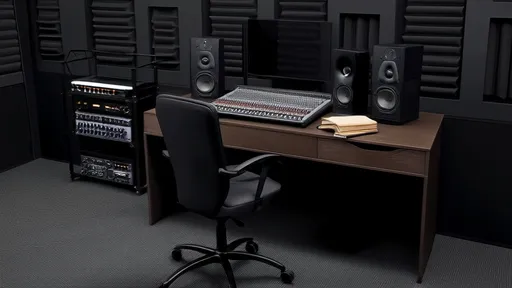
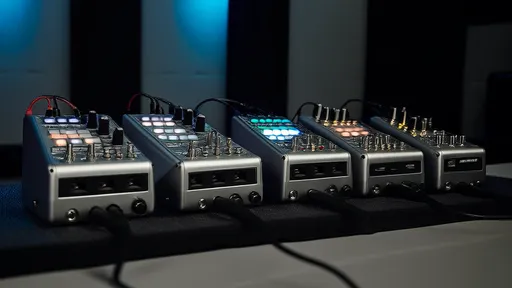
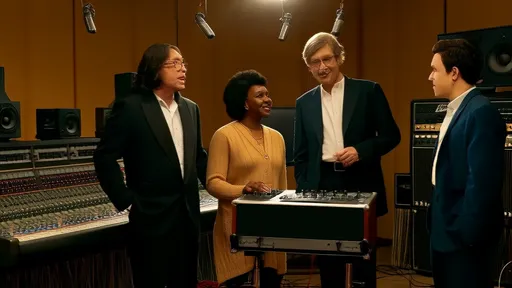
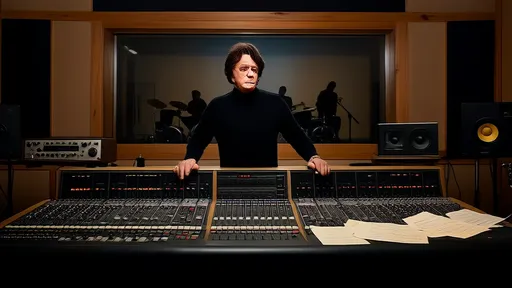
In the glittering world of pop music, where artists bask in the spotlight and fans worship at the altar of celebrity, there exists a shadowy cohort of architects working just out of frame. These are the producers, the sonic sculptors and unsung heroes whose fingerprints are on every hook, every beat, and every atmospheric layer of the songs that define generations. While the lead singer takes the bow, it is often the person behind the glass, surrounded by a labyrinth of knobs, faders, and screens, who truly architects the sound of an era.
The role of the producer is notoriously difficult to define, as it shape-shifts from project to project. It is part technician, part psychologist, part arranger, and part visionary. They are the custodians of a record's soul, tasked with translating an artist's raw, often inchoate, emotion into a polished, coherent, and marketable piece of art. They must be able to hear the diamond hidden within the rough, possessing an almost preternatural ability to discern a hit melody from a simple hum or a compelling rhythm from a casual tap on a tabletop. This requires a unique blend of technical mastery and intuitive artistry.
To understand their profound impact, one need only look back at the tectonic shifts in popular music, nearly all of which were producer-driven. In the 1960s, the warm, expansive sound of Phil Spector’s "Wall of Sound" was as much a star as The Ronettes or The Righteous Brothers. He didn't just record songs; he built miniature symphonies in the studio, layering instruments upon instruments to create a dense, emotional tsunami of sound that was utterly unique. His productions weren't merely heard; they were felt viscerally, a testament to a producer imposing his own grand artistic vision onto the music.
As music evolved, so did the producer's toolkit. The 1970s and 80s witnessed the rise of the studio as an instrument itself. Pioneers like Giorgio Moroder harnessed the cold, precise power of synthesizers and drum machines to forge the relentless four-on-the-floor beat of disco, which then mutated into the backbone of early electronic and dance music. Across the Atlantic, the enigmatic Martin Hannett used the studio not to beautify, but to disfigure and unsettle. His work with Joy Division is a masterclass in atmospheric production, where space, delay, and treated sounds created a chilling, cavernous landscape that perfectly mirrored the band's existential angst. The music was inseparable from its production.
The late 80s and 90s saw the producer's role explode into the realm of pure creation with the advent of hip-hop. Here, the producer is the composer. Figures like Dr. Dre and RZA didn't just enhance a band's performance; they constructed entirely new sonic worlds from sampled fragments of old records. Dre’s G-Funk was a slick, melodic, and menacingly smooth sound that came to define West Coast rap, built on deep basslines and Parliament-Funkadelic samples. Meanwhile, RZA’s gritty, lo-fi, kung-fu-sample-laced productions for the Wu-Tang Clan crafted a dark, cinematic universe that felt both raw and intricately designed. They were auteurs in the truest sense.
In the modern era, the title of "producer" has become even more diffuse and powerful. A producer like Max Martin operates as a hit-making algorithm in human form, a master of the mathematical perfection of pop songwriting. His collaborations with artists from Britney Spears to The Weeknd have generated a staggering number of chart-toppers, all bearing his signature blend of explosive choruses and impeccable melodic craftsmanship. He represents the producer as an invisible superstar, whose name carries more weight in industry circles than most performers.
Conversely, someone like Jack Antonoff has carved out a role as a producer-chameleon and trusted confidant. His work with Taylor Swift, Lana Del Rey, and Lorde is less about imposing a singular sound and more about creating a safe, creative space to help artists refine and elevate their own vision. He is a collaborator and a curator of mood, helping to draw out the most authentic and powerful performances. His success underscores that the technical aspects of production are now just the price of entry; the real magic lies in emotional intelligence and relationship building.
The digital revolution has democratized music production, placing powerful tools in the bedrooms of teenagers worldwide. Yet, this accessibility has not diminished the value of the great producer; it has heightened it. In an ocean of content, the ability to craft a sound that is not only professional but also distinctive, emotional, and compelling is rarer than ever. The producer remains the crucial filter, the quality control, and the creative accelerant.
Their legacy is a paradox: the greatest success is to make their own contribution feel invisible, to make the final product seem so effortless and inherent to the artist that their handiwork goes unnoticed by the masses. They are the ghost in the hit machine. We may dance to the singer's voice and memorize the lyricist's words, but we are moving to the producer's groove. We are feeling the producer's atmosphere. They defined the sound of our past, they are crafting the sound of our present, and they will undoubtedly architect the sound of our future, all from the shadows of the control room.

By /Aug 22, 2025
By /Aug 22, 2025

By /Aug 22, 2025
By /Aug 22, 2025

By /Aug 22, 2025
By /Aug 22, 2025
By /Aug 22, 2025
By /Aug 22, 2025
By /Aug 22, 2025
By /Aug 22, 2025
By /Aug 22, 2025

By /Aug 22, 2025
By /Aug 22, 2025

By /Aug 22, 2025

By /Aug 22, 2025
By /Aug 22, 2025
By /Aug 22, 2025
By /Aug 22, 2025
By /Aug 22, 2025
By /Aug 22, 2025