In the pantheon of electronic music, few acts have carved out a legacy as enigmatic and enduring as Daft Punk. The French duo, Thomas Bangalter and Guy-Manuel de Homem-Christo, didn't just make music; they crafted an entire mythology around their art. Cloaked in robot helmets from 2001 onward, they became more than musicians—they were avatars, symbols of a new era where technology and humanity could merge to create something profoundly beautiful and danceable. Their journey wasn't merely about producing hits; it was about redefining an entire genre for the 21st century, proving that disco never died—it simply evolved, waiting for the right architects to rebuild it with circuits and soul.
The story of Daft Punk is intrinsically linked to the revival and reinvention of disco. In the late 1990s and early 2000s, disco was often viewed as a relic of the past, a glittery footnote in music history overshadowed by the rise of hip-hop, grunge, and commercial pop. But Bangalter and de Homem-Christo saw something else: the genre's untapped potential for futurism. Growing up in Paris, they were influenced by the funky, four-on-the-floor rhythms of 1970s icons like Chic and Cerrone, but they also immersed themselves in the burgeoning house and techno scenes. Their genius lay in synthesizing these elements, using cutting-edge technology to extract disco's core essence—its joy, its groove, its emotional release—and project it into a new millennium.
Their 1997 debut album, Homework, was a seismic event. Tracks like "Around the World" and "Da Funk" were not straightforward disco revivals; they were deconstructions. The duo stripped the genre down to its rhythmic skeleton, emphasizing repetitive, hypnotic basslines and drum machine patterns that felt both robotic and irresistibly funky. This approach was a revelation. It demonstrated that disco's power wasn't solely in its orchestral arrangements or diva vocals but in its primal, physical pull. Homework was a blueprint, showing how electronic tools could be used to amplify rather than diminish the genre's dancefloor magnetism.
However, it was with their 2001 album Discovery that Daft Punk fully realized their vision for 21st-century disco. This was the album where they stopped deconstructing and started rebuilding. Embracing a more melodic, sample-heavy approach, they crafted a record that was both a homage to their childhood loves—filtering sounds from disco, funk, and soft rock—and a bold step forward. Tracks like "One More Time" and "Digital Love" were euphoric anthems built on layers of synthesized strings, vocoder-treated vocals, and pulsing rhythms. The sound was pristine, polished, and unapologetically optimistic. It was disco, but viewed through a futuristic lens—a vision of dance music where emotion and technology were not in conflict but in perfect harmony.
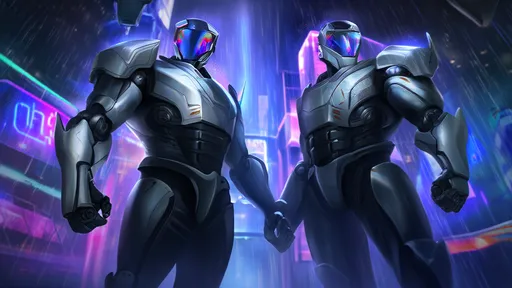
The robot personas were crucial to this narrative. By adopting these anonymous, cybernetic identities, Daft Punk made a profound statement: the music, not the musicians, was the star. This was a concept deeply rooted in disco's history, where producers like Giorgio Moroder and acts like Kraftwerk had already begun exploring the relationship between man and machine. But Daft Punk took it further, becoming living embodiments of their art. The helmets were more than a gimmick; they were a metaphor for their sonic philosophy. They represented the idea that anyone, anywhere, could connect to the universal language of rhythm and melody. It erased ego and focused entirely on the experience, making their music feel like a shared, almost spiritual event on the dancefloor.
Their influence rippled out far beyond the confines of electronic music. Discovery became a touchstone for a new generation of producers and artists. It paved the way for the disco-infused house revival of the mid-2000s, inspiring acts like Justice, LCD Soundsystem, and later, artists across the pop spectrum. Daft Punk proved that dance music could be both intellectually intriguing and massively popular. Their meticulous production, which often involved resurrecting and re-playing vintage disco samples with modern equipment, set a new standard for quality and depth in electronic music production. They didn't just use technology; they revered it, treating the studio as an instrument in itself.
This reverence culminated in their 2013 masterwork, Random Access Memories. If Discovery was their vision of futurism, this album was a time machine, a lavish, live-recorded ode to the late 1970s and early 1980s studio sessions that birthed the original disco and soft rock records they loved. Teaming up with legends like Nile Rodgers, Giorgio Moroder, and Paul Williams, they created an album that was breathtaking in its ambition and execution. Lead single "Get Lucky" became a global phenomenon, a song so effortlessly cool and joyful it felt like it had always existed. The album was a full-circle moment, demonstrating that their robotic facade had always been in service of deeply human music. It argued that the soul of disco wasn't in its era but in its feeling—a feeling that could be replicated and renewed with care, passion, and impeccable technique.
Daft Punk's impact on 21st-century disco is immeasurable. They took a genre often dismissed as frivolous and gave it depth, intellectual weight, and a new aesthetic. They showed that dance music could be art. Their use of technology was never cold or alienating; instead, it was warm, funky, and alive. They understood that at its heart, disco is about liberation—freedom on the dancefloor, freedom from prejudice, freedom to lose oneself in a moment of pure joy. By channeling this spirit through their robotic personas, they created a powerful paradox: the most human music of the new century was made by machines. Or rather, it was made by two humans who understood that machines could help us connect to our humanity in ways we never thought possible.
When they announced their dissolution in 2021, it felt like the end of an era. But their legacy is permanent. They defined 21st-century disco not by replicating the past but by reimagining it for a new world. In doing so, they gave us a soundtrack for the future—one that continues to make us dance, dream, and remember that beneath the chrome and circuitry, the heart of music always beats with a funky, four-on-the-floor rhythm.

By /Aug 22, 2025
By /Aug 22, 2025

By /Aug 22, 2025
By /Aug 22, 2025

By /Aug 22, 2025
By /Aug 22, 2025

By /Aug 22, 2025
By /Aug 22, 2025
By /Aug 22, 2025

By /Aug 22, 2025
By /Aug 22, 2025
By /Aug 22, 2025
By /Aug 22, 2025

By /Aug 22, 2025

By /Aug 22, 2025
By /Aug 22, 2025
By /Aug 22, 2025
By /Aug 22, 2025
By /Aug 22, 2025
By /Aug 22, 2025