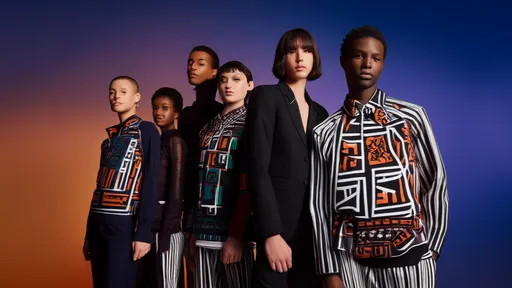
The fashion industry has long been criticized for its narrow standards of beauty, but in recent years, a noticeable shift has taken place on runways and in advertising campaigns. The emergence of models who defy traditional norms—whether through size, age, disability, or ethnicity—has sparked a complex debate: Is this newfound diversity a genuine stride toward inclusivity, or merely a savvy marketing strategy designed to appeal to a broader consumer base?
On the surface, the changes are undeniable. Plus-size models like Ashley Graham and Paloma Elsesser have graced the covers of major magazines, while older models such as Maye Musk and Lauren Hutton continue to book high-profile jobs. The industry has also seen increased representation of models with disabilities, like Jillian Mercado and Aaron Rose Philip, as well as a greater variety of ethnic backgrounds. These developments suggest a departure from the homogenized ideals that have dominated fashion for decades.
Brands are quick to tout their commitment to diversity, often framing it as a moral imperative. Campaigns featuring a wide range of body types, skin colors, and abilities are promoted as evidence of a more progressive ethos. Consumers, particularly younger generations, increasingly expect brands to reflect the real world—a world that is diverse and multifaceted. In response, companies are eager to align themselves with values like body positivity and racial equality, recognizing that such alignment can enhance their public image and drive sales.
However, skeptics argue that this embrace of diversity is often superficial. They point to instances where brands feature diverse models in advertising but fail to extend that inclusivity to their internal practices, such as hiring diverse designers, photographers, and executives. The use of diverse faces can sometimes feel like tokenism—a checkbox exercise rather than a deep-rooted commitment to change. When a brand features one plus-size model in a sea of thin ones, or one model of color in an otherwise white campaign, it raises questions about the authenticity of their efforts.
Moreover, the timing of this shift coincides with growing social movements advocating for inclusivity. The body positivity movement, Black Lives Matter, and disability rights activism have all gained significant traction, pressuring industries to reassess their standards. From this perspective, the fashion industry’s move toward diversity may be less about genuine progress and more about staying relevant and avoiding backlash. It is a reactive rather than proactive approach, driven by market forces rather than moral conviction.
Another layer to this debate is the commercial incentive. Diversity sells. Studies have shown that consumers are more likely to support brands that represent them authentically. Inclusivity has become a powerful marketing tool, capable of differentiating a brand in a crowded marketplace. By showcasing diverse models, companies can tap into niche markets and foster loyalty among underrepresented groups. This economic motivation complicates the narrative, blurring the line between altruism and opportunism.
Yet, even if the initial impetus is commercial, the impact can still be meaningful. Representation matters. Seeing someone who looks like you in media and advertising can boost self-esteem and challenge harmful stereotypes. For many, the increased visibility of diverse models is a welcome change, regardless of the underlying motives. It opens doors for models who were previously excluded and slowly reshapes societal perceptions of beauty. The fact that diversity is profitable may ensure its longevity in the industry, creating a feedback loop where demand for inclusivity reinforces its supply.
However, the industry’s commitment is often tested when trends change. History has shown that fashion is cyclical, and what is celebrated today may be discarded tomorrow. If diversity becomes just another trend, it risks being abandoned when the next big thing comes along. True progress requires structural change—diversity in boardrooms, inclusive sizing in clothing lines, and long-term partnerships with diverse talent. Without these foundations, the current wave of inclusivity may prove to be fleeting.
There are also criticisms that the industry’s version of diversity is still limited. Plus-size models, for example, are often smaller than the average plus-size woman, and models of color may still be expected to conform to Eurocentric beauty standards. Disability representation, while growing, remains rare and often focuses on visible disabilities, ignoring the spectrum of invisible conditions. These limitations suggest that the industry’s embrace of diversity is partial and selective, catering to a palatable version of difference rather than fully embracing it.
In conclusion, the diversity seen in the modeling industry today is a complex phenomenon, shaped by both social progress and commercial interests. While there are undeniable benefits to increased representation, the motives behind it are often mixed. The challenge lies in distinguishing between performative allyship and genuine inclusion. As consumers, we play a role in holding brands accountable—by supporting those who demonstrate a sustained commitment to diversity and questioning those who do not. The future of inclusivity in fashion will depend on whether the industry moves beyond token gestures and embeds diversity into its very fabric.
By /Aug 21, 2025
By /Aug 21, 2025
By /Aug 21, 2025

By /Aug 21, 2025

By /Aug 21, 2025

By /Aug 21, 2025

By /Aug 21, 2025

By /Aug 21, 2025

By /Aug 21, 2025
By /Aug 21, 2025

By /Aug 21, 2025
By /Aug 21, 2025
By /Aug 21, 2025
By /Aug 21, 2025

By /Aug 21, 2025
By /Aug 21, 2025

By /Aug 21, 2025

By /Aug 21, 2025
By /Aug 21, 2025

By /Aug 21, 2025