The hushed galleries of fashion exhibitions have long been sanctuaries of aesthetic contemplation, places where visitors commune with the ghosts of designers past and present. Yet, beneath the curated silence and the spotlighted mannequins, a quiet but profound commercial revolution is underway. The traditional economic model, heavily reliant on ticket sales to fund these often-costly productions, is being aggressively supplemented—and in some notable cases, entirely usurped—by a burgeoning market for exhibition-derived merchandise. The question is no longer just about how many visitors pass through the turnstiles, but about how much of the exhibition they can carry home with them in a shopping bag.
The shift is a strategic response to a challenging financial landscape. Mounting a world-class fashion exhibition is an exorbitantly expensive endeavor. It involves astronomical insurance costs for priceless garments, sophisticated climate control systems, intricate set design, international shipping, and significant curatorial research. Ticket sales alone, even when they reach blockbuster numbers, often barely cover a fraction of the total outlay. Institutions like the Victoria and Albert Museum in London or The Metropolitan Museum of Art's Costume Institute in New York have pioneered a new approach: treating the exhibition itself as a magnificent showroom, a physical and conceptual launchpad for a parallel product line. The art is on the walls, but the business is in the gift shop.
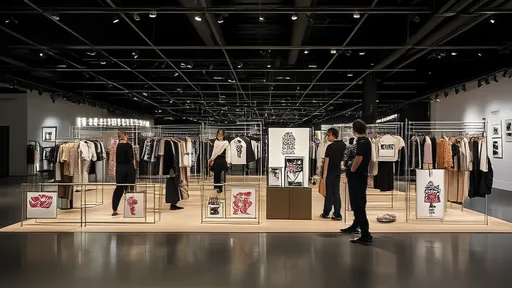
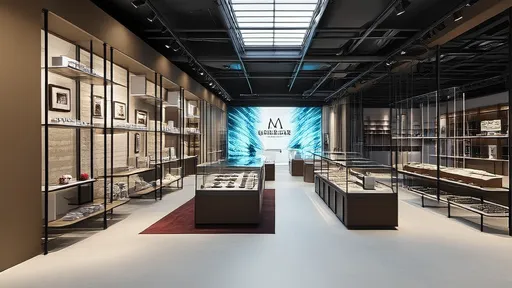
This phenomenon, often termed 'exhibition retailization,' leverages the intense emotional and intellectual engagement a visitor experiences within the gallery. A person who has spent an hour immersed in the world of Alexander McQueen or Christian Dior leaves not just with memories and photographs, but with a powerful, cultivated desire for a tangible piece of that experience. The museum shop, once an afterthought stocked with postcards and generic trinkets, has been transformed into a critically acclaimed extension of the exhibition itself. It is the final, and most commercially potent, chapter of the curatorial narrative.
The merchandise itself has evolved far beyond the simple catalog or keychain. Today, it encompasses high-end, limited-edition collaborations that blur the line between souvenir and collectible design object. For a major exhibition, institutions will partner with the fashion house’s archives or contemporary designers to produce exclusive items that are directly inspired by the themes and pieces on display. This can include finely woven scarves reproducing iconic prints, ceramic tableware featuring patterns from a designer’s most famous collection, art books of unparalleled quality, and meticulously crafted replicas of jewelry or accessories seen in the show. These items are not mere souvenirs; they are authentic fragments of the aesthetic universe the visitor has just paid to enter.
The financial figures are staggering and tell a compelling story. While a ticket might cost a visitor $25, the average spend per head in the retail space can easily double or triple that amount. For blockbuster shows, retail revenue can account for up to half of the exhibition's total income, sometimes generating more pure profit than ticket sales due to the high margins on curated products. A family of four might spend $100 on admission, but then proceed to purchase a $75 catalog, two $40 scarves, and a set of $30 notebooks—instantly quadrupling their financial contribution to the institution. The math is irresistible for curators and financial directors alike.
Furthermore, the retail strategy extends the life and reach of the exhibition far beyond its physical and temporal limits. An exclusive product line, often sold online simultaneously, allows the institution to tap into a global audience of fashion enthusiasts who may never set foot in the museum. A fan in Tokyo or São Paulo can purchase a piece of the McQueen or Dior exhibition, participating in the cultural moment and fueling the institution's revenue stream from thousands of miles away. This global e-commerce aspect transforms a local, temporary event into a perennial, worldwide commercial enterprise.
The success of this model hinges on impeccable curation of the retail experience itself. The products must feel essential, not exploitative. They must possess a perceived authenticity and a tangible connection to the exhibition's content. A poorly designed, cheaply made item can cheapen the entire experience, while a beautifully conceived object can deepen the visitor's understanding and appreciation. The most successful derivative products act as three-dimensional footnotes—objects that continue the conversation started in the gallery. This requires a deep collaboration between curators, designers, and retail buyers, ensuring the shop is a seamless extension of the show’s intellectual and aesthetic rigor.
Critics of this commercial tilt worry about the commodification of culture, fearing that the artistic mission of museums is being corrupted by crass commercialism. They ask if the tail is wagging the dog: are exhibitions now being chosen for their retail potential rather than their artistic or historical merit? While this is a valid concern, most major institutions navigate this tension carefully. The commercial success generated by retail allows them to fund more experimental, less commercially obvious shows, educational programs, and the conservation of their permanent collections. The revenue from a popular Chanel exhibition might very well subsidize a future show on an obscure but important historical textile technique.
In conclusion, the landscape of the fashion exhibition has been irrevocably altered. The gift shop has been elevated from a peripheral amenity to a central pillar of economic sustainability and audience engagement. While the ticket grants access to the spectacle, it is the衍生品 (derivative product) that allows the visitor to own a piece of it, funding the future of cultural display in the process. The most successful fashion exhibitions today are not just presentations of clothing; they are total brand experiences, and their profitability is increasingly measured not at the door, but at the checkout counter.

By /Aug 21, 2025
By /Aug 21, 2025

By /Aug 21, 2025

By /Aug 21, 2025

By /Aug 21, 2025

By /Aug 21, 2025

By /Aug 21, 2025

By /Aug 21, 2025

By /Aug 21, 2025
By /Aug 21, 2025

By /Aug 21, 2025
By /Aug 21, 2025
By /Aug 21, 2025

By /Aug 21, 2025

By /Aug 21, 2025
By /Aug 21, 2025

By /Aug 21, 2025

By /Aug 21, 2025

By /Aug 21, 2025

By /Aug 21, 2025