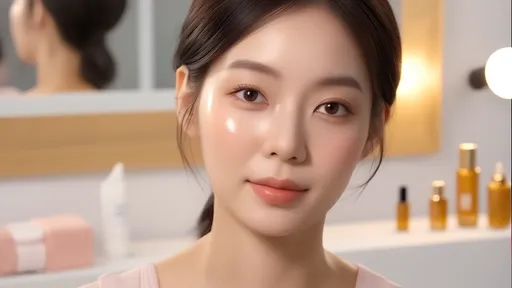
In the ever-evolving world of beauty, the "no-makeup" makeup look has transcended from a fleeting trend to a timeless aesthetic. Among its most coveted iterations is the "pseudo-bareface" makeup—a technique so masterfully subtle it mimics the appearance of naturally flawless skin. This isn't about masking imperfections but rather enhancing the skin's innate vitality, creating a complexion that looks healthy, radiant, and, most importantly, like it can breathe. The foundation of this look, quite literally, is a base that appears undetectable, merging seamlessly with the skin to project an effortless elegance.
The philosophy behind a breathable base is rooted in skincare-first preparation. The goal is to create a canvas that is so well-hydrated, smooth, and balanced that it requires minimal product intervention. This begins long before any foundation is touched. A meticulous routine involving gentle cleansing, potent yet lightweight serums packed with hydrating ingredients like hyaluronic acid or niacinamide, and a non-greasy, plumping moisturizer is paramount. The skin should feel supple and quenched, not heavy or slick. Following this, a primer that blurs pores and fine lines without a silicone-heavy feel can be applied, but only if necessary. The ideal is to let the skin's prepared texture do most of the work.
Selecting the right product is where artistry meets science. The hero of the breathable base is not a full-coverage, matte foundation but rather a skin tint, a tinted moisturizer, a light-coverage liquid foundation, or even a cushion compact. The key characteristics to look for are a fluid, watery, or serum-like consistency and a dewy or natural finish. These formulations are typically infused with skincare benefits, offering hydration and luminosity rather than just pigment. They allow the skin's natural texture to show through—a vital component of the authentic, breathable effect. The shade matching process must be impeccable; the product should disappear into the skin at the jawline, with no clear demarcation between the face and neck.
Application technique is arguably more critical than the product itself. Fingers, believe it or not, are often the finest tools for this job. The warmth from your hands helps to melt the product into the skin, ensuring it bonds perfectly for a second-skin effect. Start by dispensing a small amount—less than you think you need—onto the back of your hand. Using your fingertips, dot the product primarily on the center of the face: the forehead, nose, cheeks, and chin. Then, using gentle, pressing and patting motions, work the product outward and upward. This press-and-roll technique pushes the product into the skin rather than letting it sit on top. A damp beauty sponge can also be used to bounce and press the product in for an even more airbrushed, diffused finish. The mantra is always blend, press, and diffuse, never drag or smear.
Strategic concealing follows the base application. Instead of blanketing the entire face with high coverage, use a lightweight, creamy concealer only where absolutely needed—dabbing minute amounts onto any residual redness around the nose, darkness under the eyes, or the occasional blemish. Gently tap it into place with your ring finger or a small brush, ensuring the edges are seamlessly melted into the surrounding foundation. This targeted approach maintains the overall transparency of the base, preventing a cakey, overdone appearance.
Setting the makeup is a delicate balancing act. The aim is to lock in the look without sacrificing its dewy, fresh-from-within glow. A heavy dusting of powder is the enemy of the breathable base. Instead, opt for a finely-milled, translucent loose powder. Using a small, fluffy brush, lightly press the powder only into the areas that tend to get shiny—typically the T-zone. Completely avoid the high points of the face like the cheekbones and brow bone, where you want the skin's natural luminosity to shine through. For an even more undetectable finish, some artists recommend using a setting spray first to dampen the powder brush, which helps the powder meld with the foundation for a truly seamless, skin-like finish.
The final touch to a breathing base is embracing and enhancing the skin's natural dimension. Instead of heavy contouring, use a liquid or cream blush in a shade that mimics a natural flush—think rose, peach, or berry—applied to the apples of the cheeks and blended upward. A subtle sweep of a liquid highlighter on the high points of the face catches the light in a way that looks inherently healthy, not glittery. This approach to color cosmetics complements the lightweight base, working with it rather than obscuring it.
Ultimately, mastering the pseudo-bareface base makeup is about a shift in perspective. It moves away from the concept of coverage and toward the celebration of skin. It’s a practice in restraint, precision, and embracing a certain kind of perfected imperfection. The result is a complexion that doesn't just look beautiful but feels incredibly lightweight and authentic—a true testament to the art of makeup that looks like you woke up with it.

By /Aug 21, 2025

By /Aug 21, 2025

By /Aug 21, 2025

By /Aug 21, 2025

By /Aug 21, 2025

By /Aug 21, 2025

By /Aug 21, 2025
By /Aug 21, 2025

By /Aug 21, 2025

By /Aug 21, 2025

By /Aug 21, 2025

By /Aug 21, 2025

By /Aug 21, 2025

By /Aug 21, 2025

By /Aug 21, 2025

By /Aug 21, 2025

By /Aug 21, 2025

By /Aug 21, 2025

By /Aug 21, 2025
By /Aug 21, 2025