The sidewalks outside fashion week venues have transformed from mere thoroughfares into runways in their own right, a stage where the narrative of street style has undergone a profound and fascinating evolution. What began as an organic, almost anthropological documentation of personal style has morphed into a highly curated, commercialized, and strategic performance. The journey from the candid snap to the orchestrated pose is a story of changing technology, the rise of influencer culture, and the blurring of lines between the show inside the tent and the spectacle on the street.
In the early to mid-2000s, the golden age of fashion blogging, street style photography was a genuine act of discovery. Photographers like Scott Schuman of The Sartorialist and Tommy Ton pioneered a form that sought out interesting individuals with a unique point of view, regardless of their status. The goal was authenticity. The shots were often candid, capturing a laugh, a stride, a moment of unguarded elegance. The subjects were a mix of editors, buyers, and stylish unknowns, their clothes telling a story of personal taste rather than corporate sponsorship. The resulting images felt like a genuine glimpse into the sartorial soul of the city, a democratic celebration of individual style that existed parallel to, but separate from, the high-gloss productions inside the shows.
The catalyst for change was multifaceted. The advent of high-quality smartphone cameras and social media platforms, primarily Instagram, democratized photography and created an insatiable, instantaneous demand for content. Suddenly, everyone was a photographer, and everyone could be a subject. This digital ecosystem created a new currency: visibility. Being photographed became not just a pleasant surprise but a measurable metric of success, a way to attract followers, secure brand deals, and build a personal brand. The street style star was born, and with them, a new economy of attention.
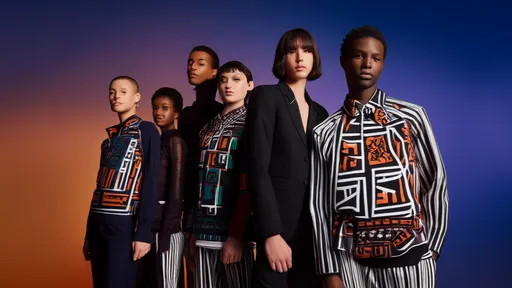
This economic incentive fundamentally altered the dynamics of the sidewalk. Outfits became less about personal expression and more about strategic communication. Looks were meticulously planned weeks in advance, often in direct collaboration with luxury brands eager to seed their latest products on high-traffic feeds. Garments were borrowed, outfits were changed multiple times a day, and the line between attending a show and working as a billboard for a label became increasingly indistinct. The sidewalk was no longer a space of transit but a destination in itself, a key touchpoint in the fashion week marketing machine.
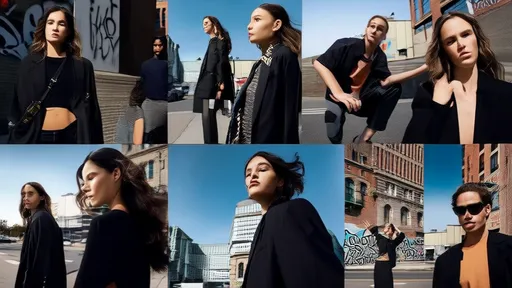
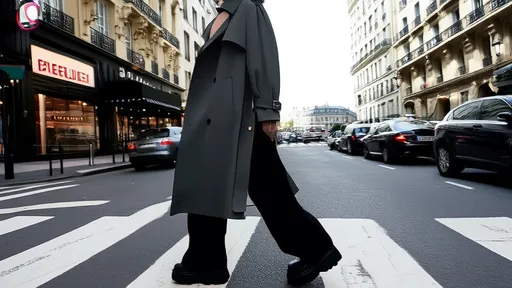
Consequently, the nature of the photography shifted to meet this new reality. The spontaneous, journalistic capture gave way to the planned portrait. Photographers, now swarmed by crowds of hopeful subjects, began to work from predetermined spots outside the major shows. The "pose" replaced the candid moment. Subjects would actively seek out known photographers, striking exaggerated poses—the "walk," the "stand," the "laugh"—designed to showcase every detail of their outfit in the most dramatic way possible. The background became just as important, with photographers often directing subjects to specific walls or doorways for the perfect, clean shot. The image was no longer found; it was manufactured.
The very geography of fashion week changed to accommodate this new ritual. Brands began constructing elaborate sets and backdrops specifically for street style photographers, effectively extending the branded experience of their show onto the street. These designated photo zones created a more controlled environment, further encouraging the performative aspect and ensuring that the brand's imagery remained consistent and high-impact. The sidewalk was effectively gentrified, transforming from a public space into a branded content farm.
This evolution has not been without its critics. Purists lament the loss of authenticity and the homogenization of style. They argue that the quest for viral moments has led to a parade of peacocking in outrageous, often unwearable outfits designed solely for shock value and photographic impact, sacrificing genuine style for mere spectacle. The diversity of subjects has also seemingly narrowed, focusing increasingly on a rotating cast of professional influencers and celebrities, pushing the truly stylish but unknown individual to the periphery.
However, to declare this evolution entirely negative is to ignore its complexities. The professionalization of street style has created career opportunities for a new generation of photographers, stylists, and influencers, diversifying the voices within the industry. It has also forced a conversation about value, performance, and authenticity in the digital age. The highly stylized images produced today are a distinct art form in their own right, requiring skill from both the photographer and the subject. They are not candid documents but deliberate creations, reflecting a different, perhaps more contemporary, truth about fashion: that it is inherently performative.
Today, the fashion week street scene exists in a hybrid state. The highly staged, brand-backed productions dominate the visual feed, but keen-eyed photographers can still find moments of unscripted style and individuality if they look beyond the scrum. The evolution from natural capture to策划摆拍 (cè huà bǎi pāi - planned posing) is a mirror held up to the broader fashion industry and digital culture itself. It reflects a shift from intimacy to spectacle, from personal taste to personal branding, and from the art of discovery to the science of visibility. The street style photograph is no longer just a picture of what someone is wearing; it is a complex artifact that tells us about economics, desire, performance, and the eternal human urge to be seen and remembered.
By /Aug 21, 2025
By /Aug 21, 2025
By /Aug 21, 2025

By /Aug 21, 2025

By /Aug 21, 2025
By /Aug 21, 2025
By /Aug 21, 2025
By /Aug 21, 2025

By /Aug 21, 2025
By /Aug 21, 2025
By /Aug 21, 2025
By /Aug 21, 2025
By /Aug 21, 2025
By /Aug 21, 2025

By /Aug 21, 2025
By /Aug 21, 2025

By /Aug 21, 2025

By /Aug 21, 2025
By /Aug 21, 2025

By /Aug 21, 2025